From Washington to you
American Camp
American Camp · San Juan County · 1859
Lieutenant Colonel Silas Casey sited the U.S. camp in 1859 outside British naval range — for a Pig War that was never fought.
The American Camp parade ground on San Juan Island was chosen by Lieutenant Colonel Silas Casey. NPS says he arrived in 1859 with reinforcements for the imminent — but never fought — Pig War. The site sat outside the range of British naval artillery, had abundant water, and offered some protection from the weather.
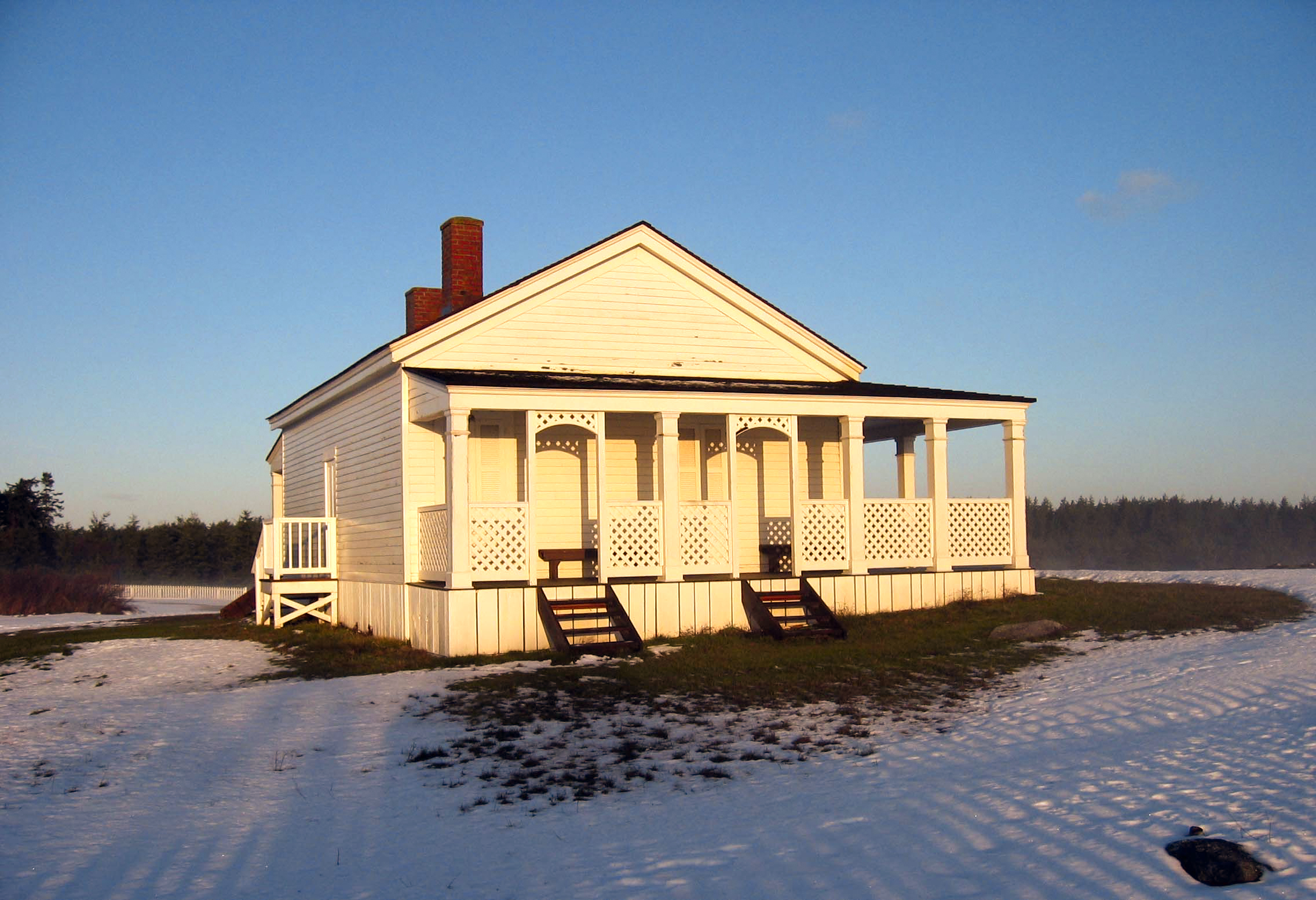
Compared with English Camp, American Camp was utilitarian. At its peak it had a telegraph station, schoolhouse, infirmary, and blockhouse. Two of the three surviving structures were relocated after the park was created. Visitors can still see the original officers' quarters, the Redoubt, and the Laundress Quarters.
San Juan Island National Historical Park covers 2,141 acres in two units. Of roughly 700 acres of American Camp prairie grassland, NPS says only about 30 acres can be considered true native prairie — some of the last surviving native prairie in Washington, about 3 percent of its original extent. The sources below are park pages.
- History
Sources (3)
government · Tier S
National Park ServiceBasic Information
government · Tier S
National Park ServicePrairies and Grasslands of San Juan Island
government · Tier S
National Park ServiceAmerican Camp
Last reviewed: September 21, 2026
Keep wandering
same park
English CampRoyal Marines camped on a Coast Salish shell bank on Garrison Bay while the United States and Britain argued over who owned the San Juans.
nearby
San Juan Islands National Wildlife RefugeFWS set these rocks, reefs, and islands aside in 1960 for migratory birds. Almost all of them are closed, with a 200-yard buffer for boats.
same arc
The Pig WarThe United States and Great Britain nearly went to war over San Juan Island. The only casualty was a pig.