From Washington to you
Gray Wolves in Washington
Northeastern Washington · Ferry County · listed endangered at species level in 1978
USFWS treats the gray wolf as a recovered species in much of the West, after listing it as endangered across the contiguous United States in 1978.
Gray wolves, Canis lupus, are the largest wild members of the dog family. USFWS says adults range from 18 to 80 kilograms (40 to 175 pounds). The species has a circumpolar range. In North America wolves primarily hunt medium and large hooved mammals.
USFWS listed gray wolves under the Endangered Species Act as subspecies or regional populations, then in 1978 reclassified the species as endangered throughout the contiguous United States and Mexico, except Minnesota, which was classified as threatened. The Northern Rocky Mountains population was delisted due to recovery in 2011, except Wyoming, delisted in 2017. Remaining wolf populations in the contiguous United States were delisted due to recovery in 2021.
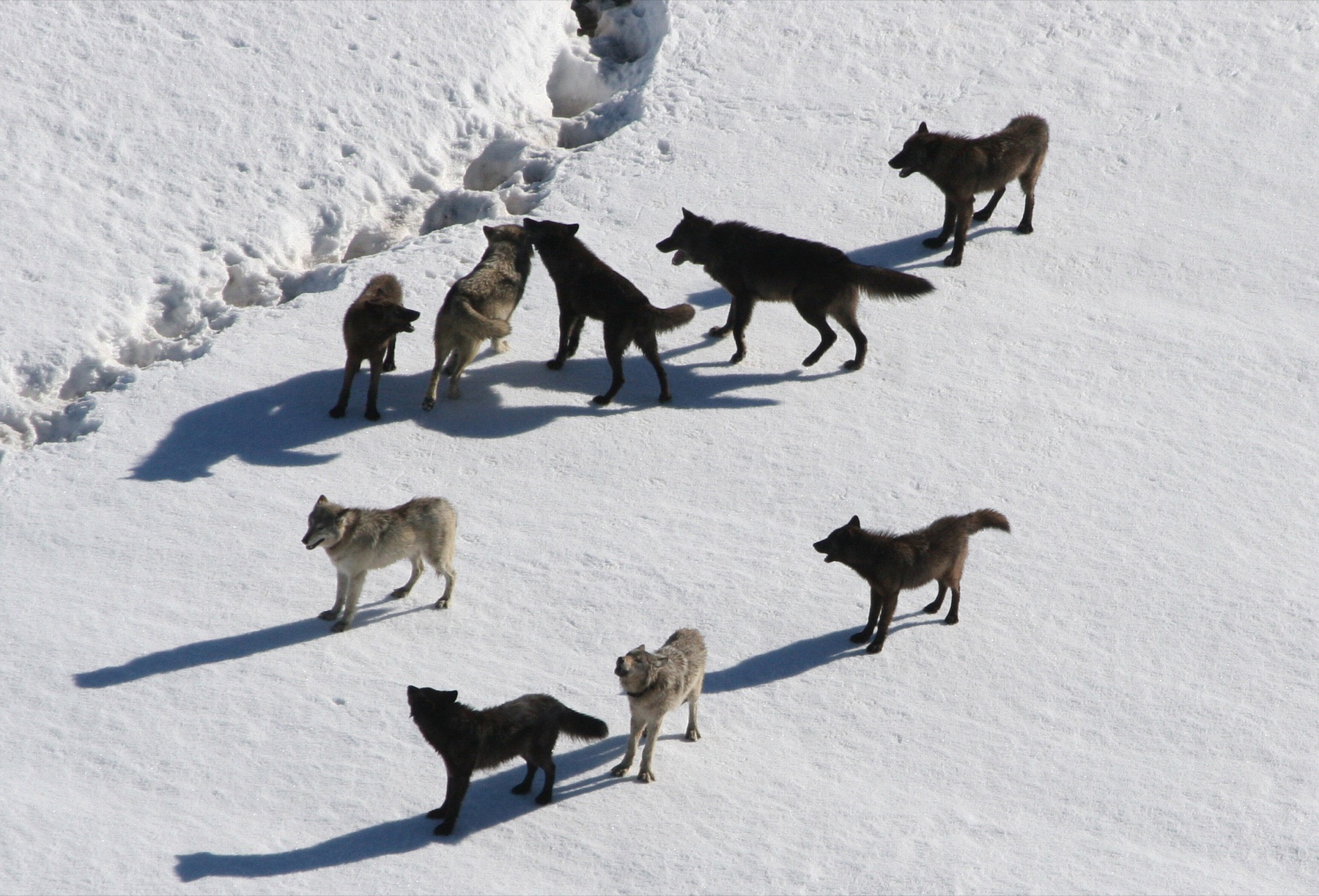
In February 2024, USFWS found that listing the gray wolf in the Western United States was not warranted. This card uses only that federal legal record. The photograph is a Yellowstone National Park species photo, not a picture of a Washington pack.
- Wildlife & Ecology
Sources (2)
government · Tier S
U.S. Fish and Wildlife ServiceFinding on the Gray Wolf in the Northern Rocky Mountains and Western United States
government · Tier S
U.S. Fish and Wildlife ServiceGray Wolf (Canis lupus)
Last reviewed: September 20, 2026
Keep wandering
nearby
North Cascades National ParkNPS calls this the most heavily glaciated area in the United States outside Alaska, with more than 300 glaciers on the high peaks.
same arc
Northern Spotted OwlUSFWS listed this old-forest owl as threatened in 1990. It still holds that status, from southwestern British Columbia through Washington and Oregon into northern California.
same arc
Olympic MarmotThe only marmot that lives nowhere else is a high-meadow squirrel of the Olympic Mountains, and Washington named it the official endemic mammal in 2009.