From Washington to you
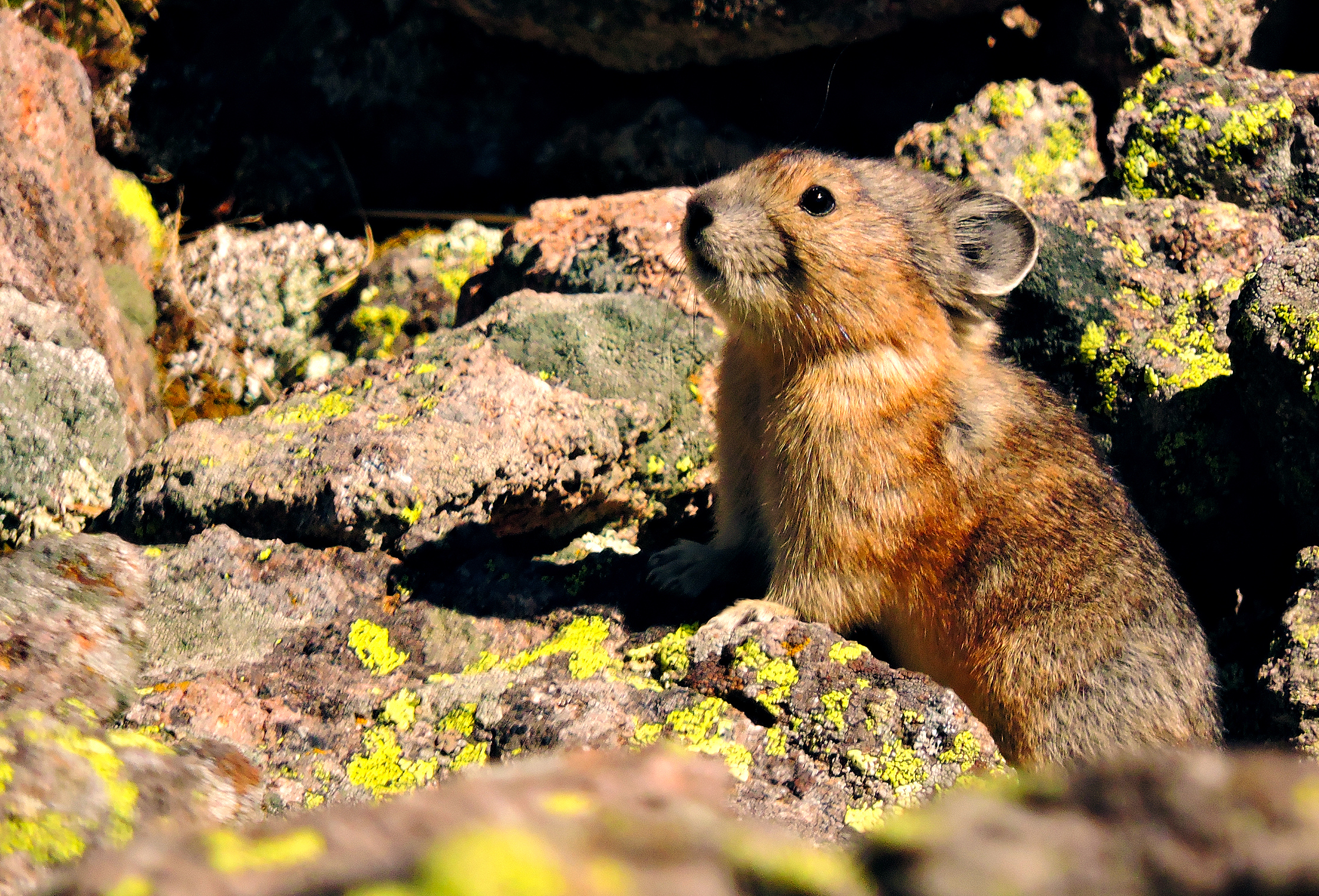
American Pika at Mount Rainier
Mount Rainier · Pierce County
NPS has mapped about 900 talus sites at Mount Rainier for a rabbit relative that does not hibernate — and can die after two hours above 82.4°F.
NPS says the American pika (Ochotona princeps) is a small herbivore related to rabbits and hares. Pikas live in talus — patches of broken rock — in western North American mountains. They do not hibernate. They collect ferns, grasses, forbs, shrub bits, and conifer twigs into haypiles for winter food. Thick fur and a high metabolism help them through alpine winters, which also makes them prone to overheating. NPS cites research that just two hours above 28°C (82.4°F) can be fatal.
Mount Rainier National Park began monitoring pikas in 2007. With volunteers and seasonal staff, about 900 individual pika sites have been identified, each a distinct talus patch that may hold one or more territories. Surveyors look and listen for pikas and search for haypiles and peppercorn-sized scat. Up to 35 individual pikas have been observed in a single talus patch. They occupy talus from a few boulders to patches larger than a soccer field. NPS says the Rainier data have not yet been analyzed to say whether numbers are stable, rising, or falling.
NPS’s Olympic mountain-goat page notes that pika never colonized the Olympics, which have long been isolated from the Cascades. The sources below are National Park Service pages.
- Wildlife & Ecology
- Science / Strange Washington
Sources (2)
government · Tier S
National Park ServiceAmerican Pika at Mount Rainier National Park
government · Tier S
National Park ServiceMountain Goat Capture and Translocation
Last reviewed: September 21, 2026
Keep wandering
same place
Mount RainierThe highest Cascade peak is also the most threatening volcano in the range — not for lava, but for mud.
same arc
Olympic MarmotThe only marmot that lives nowhere else is a high-meadow squirrel of the Olympic Mountains, and Washington named it the official endemic mammal in 2009.
same park
ParadiseMartha Longmire called this 5,400-foot meadow a paradise, and the park still measures about 640 inches of snow here in an average winter.
same park
SunriseAt 6,400 feet, this is the highest place a car can reach in Mount Rainier National Park, and it looks straight at Emmons Glacier.