From Washington to you
Elwha River restoration
Elwha River · Clallam County · 2011–2014
The largest dam removal in U.S. history gave the Elwha back to salmon — and to the people who lived along it.
For millennia the Elwha ran from the Olympic Mountains to the Strait of Juan de Fuca. Eleven varieties of salmon and trout spawned in it. Those fish were a food source for the Lower Elwha Klallam Tribe living along the banks.
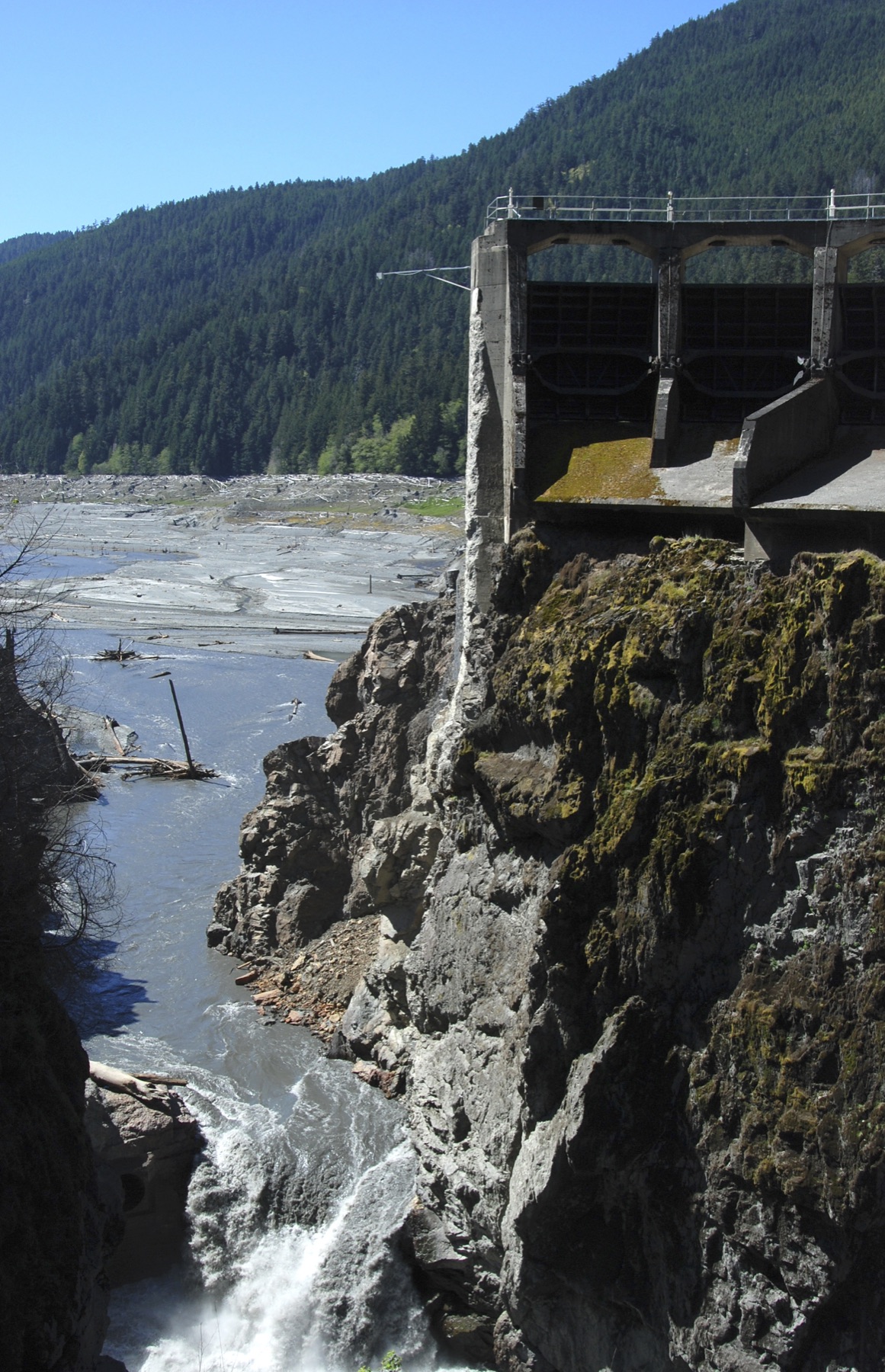
Two dams went in during the early 1900s to power Port Angeles. The Elwha Dam stood 105 feet high at river mile 4.9 and was built in 1910–12. Glines Canyon Dam, 210 feet high at river mile 13.5, was built in 1927. Together they blocked salmon, trapped sediment, and flooded tribal homelands and cultural sites.
Congress passed the Elwha River Ecosystem and Fisheries Restoration Act in 1992. After two decades of planning, the largest dam removal in U.S. history began on September 17, 2011. Six months later the Elwha Dam was gone. Glines Canyon Dam followed in 2014. The river now runs free again from the mountains to the strait. The Tribe remains a partner in the restoration that followed.
- Wildlife & Ecology
- History
- Indigenous History & Place
Sources (3)
government · Tier S
National Park ServiceElwha River Restoration
tribal · Tier S
Lower Elwha Klallam TribeElwha River Restoration — an overview
dataset · Tier S
U.S. Geological SurveyUSGS site inventory for Elwha River streamgages
Last reviewed: September 20, 2026
Keep wandering
same arc
Hiram M. Chittenden LocksTwo concrete chambers in Ballard lift ships between Puget Sound and Seattle's lakes — and pass salmon the other way.
same park
Hoh Rain ForestPacific storms drop 12 to 14 feet of rain a year on one of the last primeval temperate rain forests in the lower 48.