From Washington to you
Olympic Mountain Goats
Hurricane Ridge · Clallam County · introduced 1925–1929
Twelve mountain goats released near Lake Crescent in the 1920s were not native — and by 2018 the Olympic herd had grown to about 725.
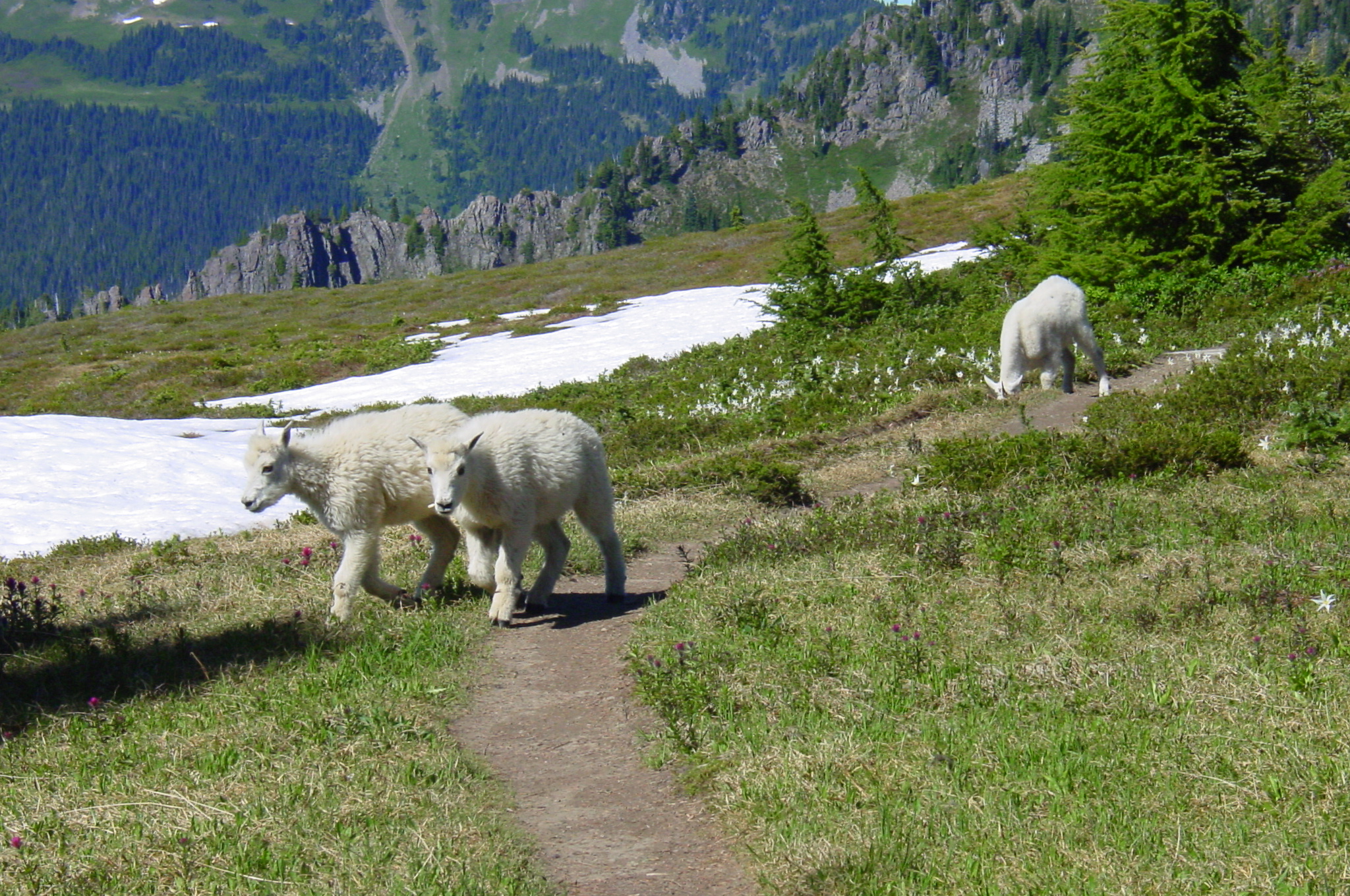
Mountain goats are not native to the Olympic Mountains. NPS says a sportsman's group introduced twelve goats in the 1920s, before the park was established in 1938. A park FAQ places the releases near Lake Crescent from 1925 to 1929. The population later grew to more than 1,000 and colonized the entire range.
Goats damaged alpine soils and rare plants. They also sought salt that does not exist in the Olympics but is often present in human urine. In 2010 a park visitor was fatally gored while hiking. Between 1981 and 1989 the park removed more than 400 goats. The herd rose again to about 725 by 2018.
A 2018 management plan aimed to remove more than 90 percent of the goats. From 2018 to 2020, the Washington Department of Fish and Wildlife translocated 325 goats to the Cascade Range, where they are native. In all, 548 goats were removed in the active phase, which ended in 2022. More than 59 percent of those animals were translocated. The sources below are Olympic National Park pages.
- Wildlife & Ecology
Sources (1)
government · Tier S
National Park ServiceMountain Goat Capture and Translocation
Last reviewed: September 21, 2026
Keep wandering
nearby
Hurricane RidgeThe most easily reached mountain area in Olympic National Park sits 17 miles south of Port Angeles, with ridgetop trails and winter snow sports when the road is open.
nearby
Lake CrescentA glacially carved lake 624 feet deep is so low in nitrogen that NPS says you can see 60 feet down, and it holds two trout found nowhere else.
nearby
Olympic MarmotThe only marmot that lives nowhere else is a high-meadow squirrel of the Olympic Mountains, and Washington named it the official endemic mammal in 2009.
same park
Olympic National Park, 1938Franklin Roosevelt signed the park into law on June 29, 1938, after a 1937 visit, on ground first reserved in 1897 and later set aside for Roosevelt elk.