From Washington to you
Pacific Fisher Reintroduction
Olympic National Park · Jefferson County · first Olympic release January 27, 2008
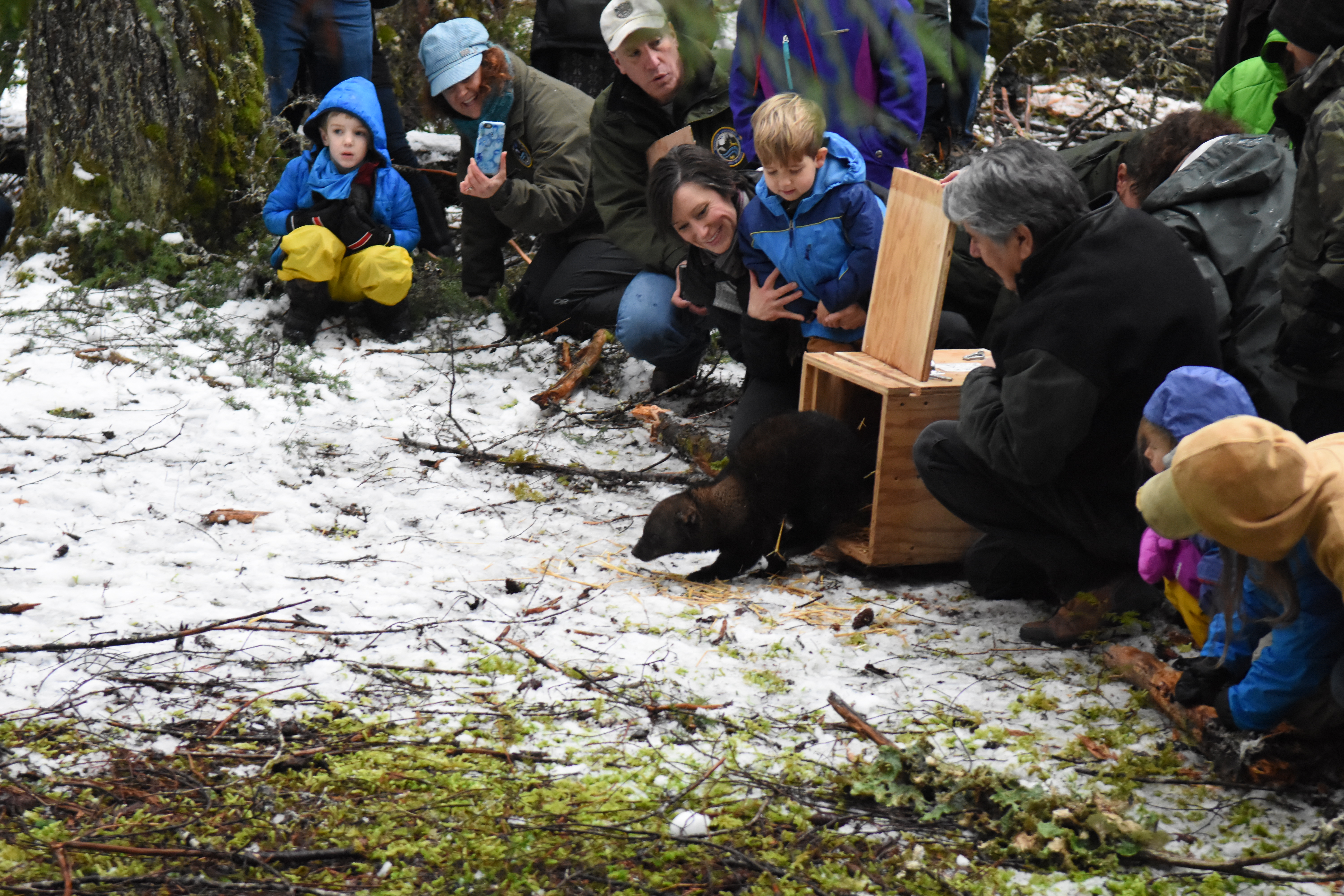
On January 27, 2008, twelve fishers from British Columbia stepped into Olympic National Park — the first of 90 animals used to bring a housecat-sized weasel back to Washington.
NPS says the fisher (Pekania pennanti) is a member of the weasel family, about the size of a large house cat, and is native to Washington, including the Olympic Peninsula. Over-trapping led to their disappearance from the state by the early 20th century. They prey on snowshoe hares, mountain beavers, rabbits, rodents, and birds, and are among the few animals that prey on porcupines. They do not fish; early settlers compared them to the European polecat, the French fichet.
On January 27, 2008, twelve fishers from British Columbia were released into remote sites in Olympic National Park. Over the next three years an additional 78 were introduced — 90 in all, live-trapped in British Columbia and driven to Port Angeles. NPS says they have since dispersed widely on the Peninsula and established home ranges in both managed and wilderness forests.
By the end of 2011 only two radio-collared fishers were still known to be alive. Camera and hair-snare studies from 2013 to 2016 found ten of the founding fishers still alive, plus several generations of offspring. A later NPS release says partners released additional Alberta fishers, including five near Lake Ozette, to boost numbers and genetic diversity after more than 250 fishers had been released across the Olympics and Cascades. The sources below are National Park Service pages.
- Wildlife & Ecology
Sources (2)
government · Tier S
National Park ServiceFishers released at Olympic National Park to boost restoration
government · Tier S
National Park ServiceFisher Reintroduction
Last reviewed: September 21, 2026
Keep wandering
same park
Hoh Rain ForestPacific storms drop 12 to 14 feet of rain a year on one of the last primeval temperate rain forests in the lower 48.
same forest
Northern Spotted OwlUSFWS listed this old-forest owl as threatened in 1990. It still holds that status, from southwestern British Columbia through Washington and Oregon into northern California.
same park
Olympic MarmotThe only marmot that lives nowhere else is a high-meadow squirrel of the Olympic Mountains, and Washington named it the official endemic mammal in 2009.
same park
Olympic National Park, 1938Franklin Roosevelt signed the park into law on June 29, 1938, after a 1937 visit, on ground first reserved in 1897 and later set aside for Roosevelt elk.