From Washington to you
Wallula Gap
Wallula Gap · Walla Walla County · Ice Age floods
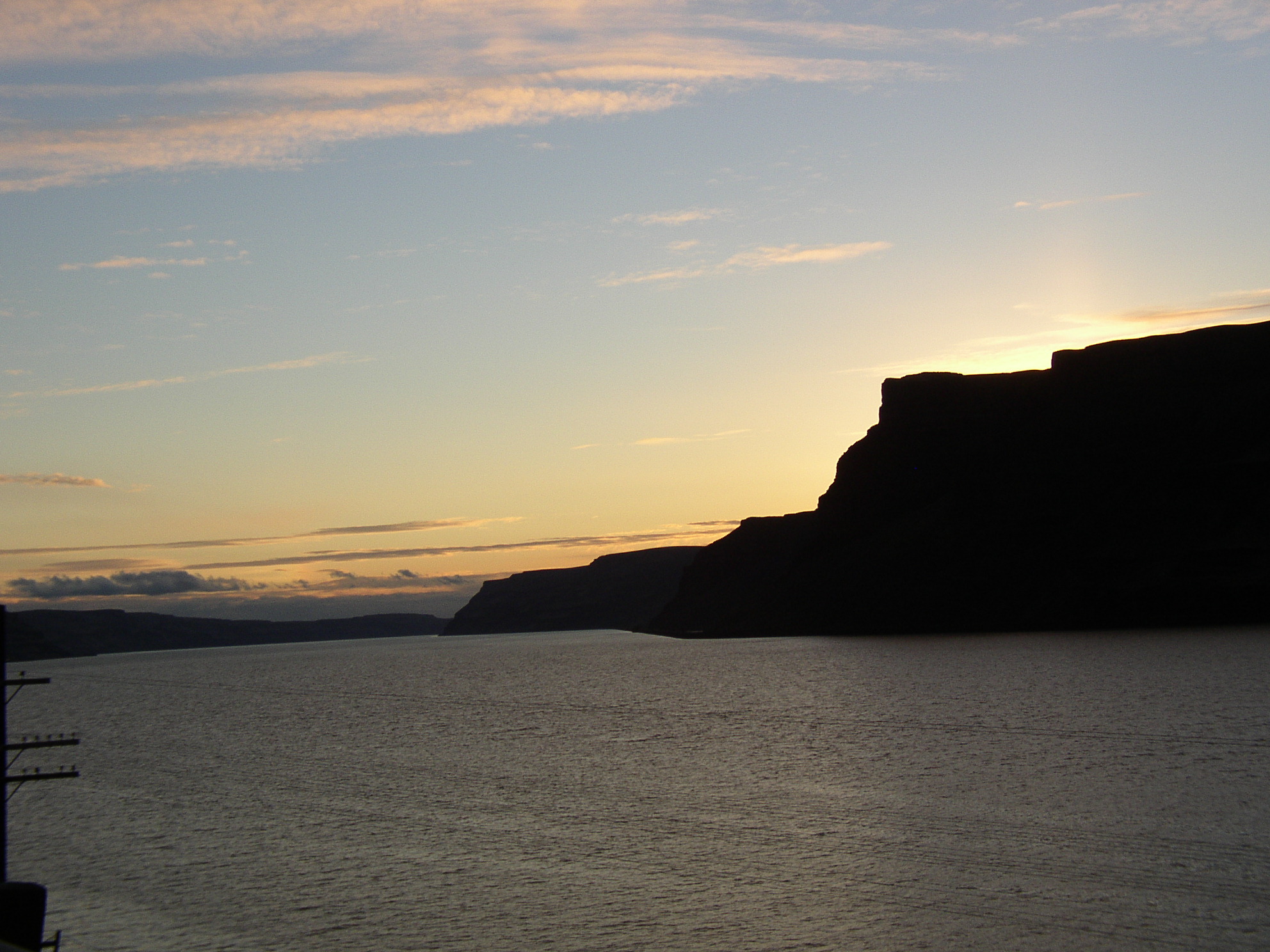
Ice Age floodwaters hit a two-mile gap that could not pass them all — and backed up into a temporary lake 900 feet deep.
All of the Ice Age floodwaters that cut the Channeled Scabland were channeled through Wallula Gap in the Horse Heaven Hills. NPS says more than 833 cubic kilometers (200 cubic miles) of water per day arrived at a gap that could discharge less than 166 cubic kilometers (40 cubic miles) per day. The rest ponded in the Pasco Basin and the Yakima and Touchet valleys as Lake Lewis.
The Ice Age Floods brochure calls the gap two miles (3.2 km) wide. Like the neck of an hourglass, the constriction backed water, ice, and debris into a temporary pond 900 feet (274 m) deep. The National Natural Landmark page says the gap is more than 1.6 kilometers (1 mile) from rim to rim and calls it the largest and most significant water gap through a basalt anticline in the Columbia Basin.
At the height of the floods, NPS estimates flow through the gap at 166 cubic kilometers (40 cubic miles) per day — nearly twice the combined flow of all the present rivers on Earth. The sources below are National Park Service Ice Age Floods pages.
- Geography & Geology
Sources (2)
government · Tier S
National Park ServicePark Brochure — Ice Age Floods National Geologic Trail
government · Tier S
National Park ServiceWallula Gap National Natural Landmark
Last reviewed: September 21, 2026
Keep wandering
same landscape
Drumheller ChannelsA cascade of buttes and basins west of Othello is the Ice Age Floods landscape the National Park Service calls the most spectacular of its kind.
same landscape
Dry FallsA 3.5-mile cliff in the Grand Coulee is the lip of a waterfall that once dwarfed Niagara.
nearby
Hanford Reach National MonumentA wartime buffer around the plutonium works left 196,000 acres of shrub-steppe and the last free-flowing stretch of the Columbia above Bonneville.
same landscape
Ice Age FloodsNPS says that 18,000 to 15,000 years ago an ice dam in northern Idaho failed, sending Glacial Lake Missoula across Washington and down the Columbia.