From Washington to you
Columbia Basin Pygmy Rabbit
Sagebrush Flat · Douglas County · wild releases since 2011
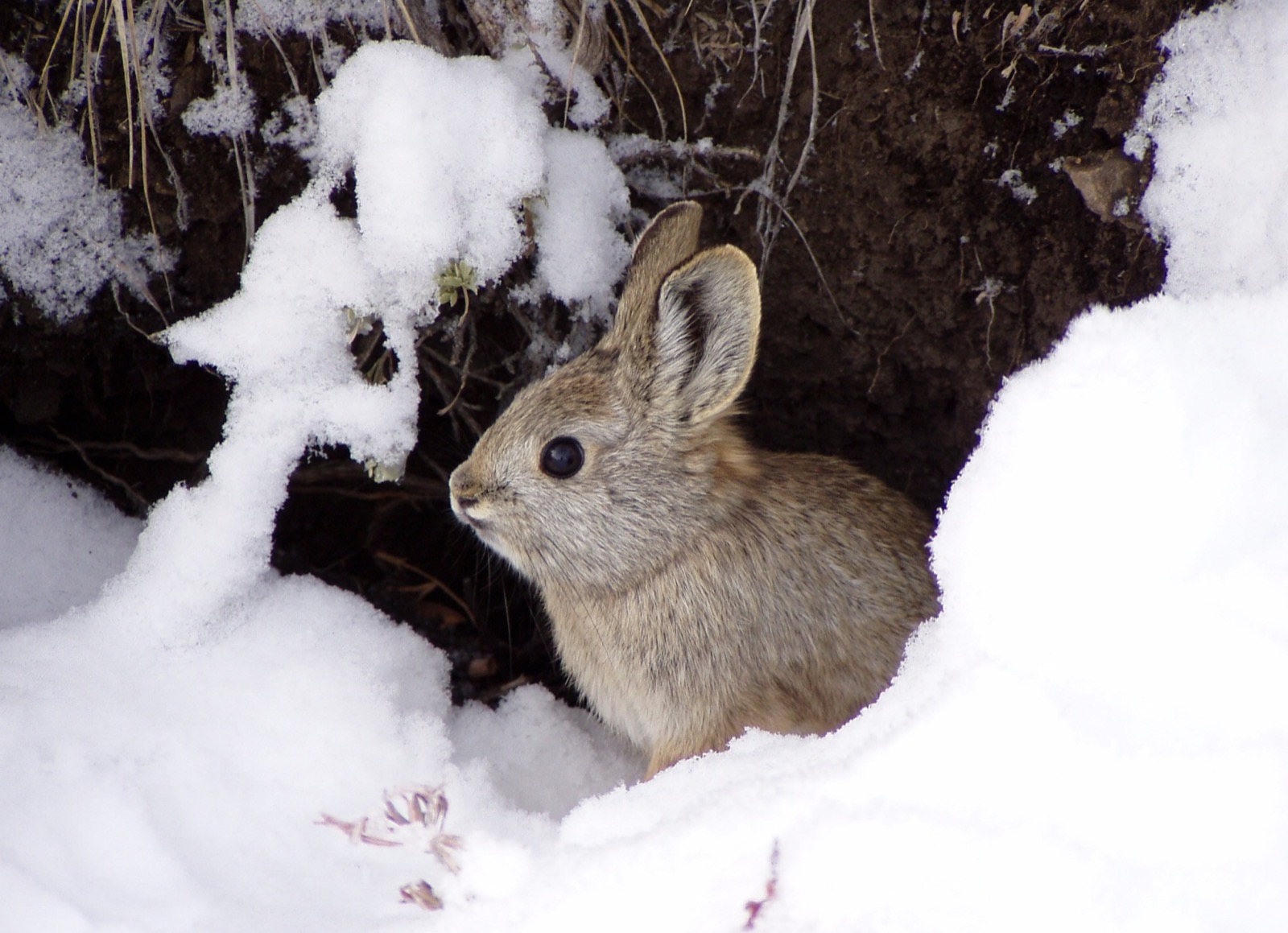
North America’s smallest rabbit survives in Washington as a distinct, endangered sagebrush population that WDFW is still putting back on the land.
WDFW says the pygmy rabbit is the smallest rabbit in North America, up to almost 12 inches long and 16 ounces. It is the only North American rabbit known to dig its own burrows. Big sagebrush is about 90 percent of the winter diet. The Columbia Basin population is geographically and genetically distinct. WDFW says it has been isolated from the rest of the species for at least 10,000 years.
The population is state and federally endangered. By 2001 as few as 16 rabbits were known in Washington. A captive-breeding program began, and since 2011 more than 2,000 rabbits have been released at Sagebrush Flat and Chester Butte wildlife areas and at Beezley Hills. As of 2021 WDFW knew wild rabbits only at Sagebrush Flat in southern Douglas County and Beezley Hills in northern Grant County. The Pearl Hill Fire in 2020 erased a third reintroduction near Jameson Lake.
Recovery partners named by WDFW include USFWS, Washington State University, the Oregon Zoo, and The Nature Conservancy. This pin is Sagebrush Flat. The sources below are Washington Department of Fish and Wildlife pages.
- Wildlife & Ecology
- Science / Strange Washington
Sources (3)
government · Tier S
Washington Department of Fish and WildlifePygmy rabbit (Columbia Basin population)
government · Tier S
U.S. Geological SurveySagebrush Flat (GNIS 1507994)
government · Tier S
Washington Department of Fish and WildlifeSagebrush Flat Wildlife Area
Last reviewed: September 21, 2026
Keep wandering
nearby
Columbia National Wildlife RefugeIce Age floods tore coulees through this desert. Irrigation seepage later filled the holes, and a 1944 refuge now winters ducks, geese, and sandhill cranes.
same arc
Gray Wolves in WashingtonUSFWS treats the gray wolf as a recovered species in much of the West, after listing it as endangered across the contiguous United States in 1978.
same arc
Hanford Reach National MonumentA wartime buffer around the plutonium works left 196,000 acres of shrub-steppe and the last free-flowing stretch of the Columbia above Bonneville.