From Washington to you
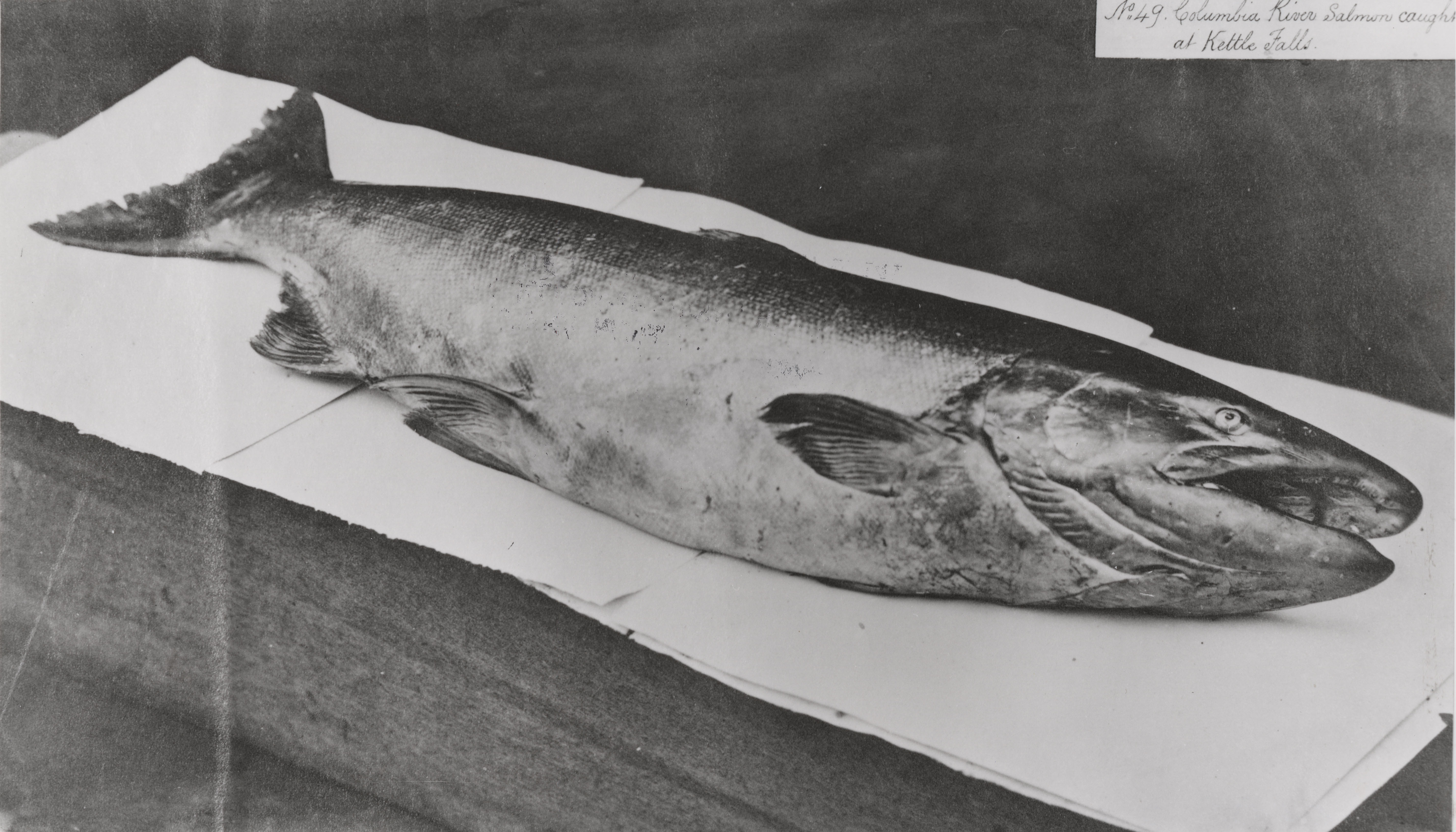
Kettle Falls Fishery
Kettle Falls · Stevens County · falls submerged after Grand Coulee, 1941
NPS calls the drowned falls an inland-Northwest center for more than 9,000 years. Tribes speared and netted thousands of salmon—enough, the park says, for half a year’s diet.
The Confederated Tribes of the Colville Reservation state that the traditional territory of the Colville tribe was primarily located around the Kettle Falls fishery, and the tribal History/Archaeology program publishes The Kettle Falls Fishery as its own history.
NPS says Kettle Falls was an annual gathering place. Angled rock slabs forced the Columbia over a series of falls that blocked migrating salmon and made them easier to catch. Gathered tribes speared and netted thousands of salmon, enough to provide half of their families’ diet for the coming year. A Lake Roosevelt history page calls Kettle Falls the second-largest salmon fishery on the Columbia and says representatives from a 200-mile radius came to fish, trade, share news, and settle quarrels. David Thompson reached the falls on June 19, 1811.
Grand Coulee Dam construction began in 1933 and finished in 1941. NPS says the dam and Lake Roosevelt ended life-sustaining fisheries and changed the cultural, spiritual, and economic lives of the Colville and Spokane tribes. The falls and Fort Colville (Hudson’s Bay Company, 1825) are now underwater. NPS says American Indians still gather annually, praying for the return of the salmon. The sources below are Colville tribal pages and National Park Service Lake Roosevelt pages.
- History
- Indigenous History & Place
Sources (4)
tribal · Tier S
Confederated Tribes of the Colville ReservationHistory/Archaeology
government · Tier S
National Park ServicePark Brochure
tribal · Tier S
Confederated Tribes of the Colville ReservationEducation & Employment
government · Tier S
National Park ServiceDavid Thompson
Last reviewed: September 21, 2026
Keep wandering
same arc
Columbia River ChinookChinook are the largest Pacific salmon. NOAA lists several Columbia River populations as threatened or endangered, and they are primary prey for Southern Resident killer whales.
nearby
Fort SpokaneThe Army built a fort above the Spokane–Columbia confluence in 1880. After the garrison left, the same buildings became a boarding school and then a hospital.
nearby
Grand Coulee DamA Depression-era dam turned the Columbia into irrigation, power, and a 151-mile lake.
same park
Lake RooseveltThe reservoir behind Grand Coulee Dam is officially Franklin D. Roosevelt Lake, a long pool NPS says is the largest reservoir in the Pacific Northwest.