From Washington to you
Grand Coulee Dam
Grand Coulee Dam · Grant County · 1933–1942
A Depression-era dam turned the Columbia into irrigation, power, and a 151-mile lake.
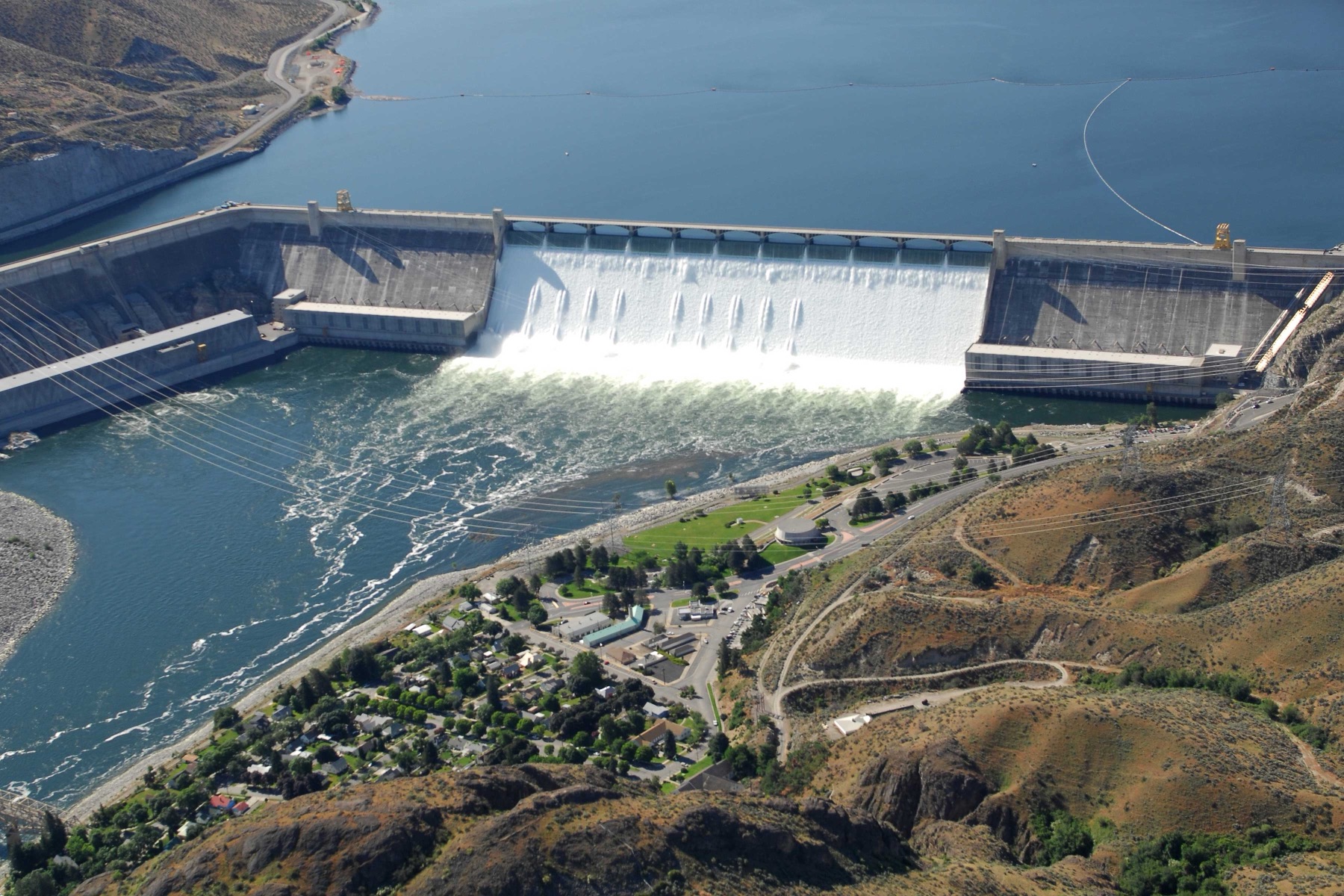
On July 16, 1933, the first stake went in for Grand Coulee Dam. The Bureau of Reclamation ran a nine-year Public Works Administration project to build what was then the largest structure in the world. The first concrete was poured in December 1935. Seventy-seven people died during construction of the original dam.
The first generator entered service on October 4, 1941. The last concrete was placed on December 12, 1941, and Reclamation accepted the dam on January 1, 1942. Lake Roosevelt now extends 151 miles upstream to the Canadian border, with 600 miles of shoreline and 82,000 acres of surface.
The dam irrigates about 600,000 acres in the Columbia Basin Project, generates hydropower, and helps control Columbia River floods. The sources below are the Bureau of Reclamation's public construction and project record.
- Geography & Geology
- History
Sources (3)
government · Tier S
U.S. Bureau of ReclamationGrand Coulee Dam History
government · Tier S
U.S. Bureau of ReclamationThe Columbia Basin Project
government · Tier S
U.S. Bureau of ReclamationGrand Coulee Dam Construction History
Last reviewed: September 20, 2026
Keep wandering
nearby
Banks LakeReclamation's equalizing reservoir for the Columbia Basin Project sits behind the Feeder Canal from Grand Coulee, the first stop for irrigation water heading south.
same arc
Columbia Basin ProjectReclamation's irrigation project now serves about 671,000 acres in east-central Washington, roughly two-thirds of the land Congress authorized in 1943.
same landscape
Dry FallsA 3.5-mile cliff in the Grand Coulee is the lip of a waterfall that once dwarfed Niagara.
nearby
Grand CouleeA dry canyon about 50 miles long holds the geologic story of a river that lost its channel — until people flooded part of it as Banks Lake.
nearby
Kettle Falls FisheryNPS calls the drowned falls an inland-Northwest center for more than 9,000 years. Tribes speared and netted thousands of salmon—enough, the park says, for half a year’s diet.
nearby
Lake RooseveltThe reservoir behind Grand Coulee Dam is officially Franklin D. Roosevelt Lake, a long pool NPS says is the largest reservoir in the Pacific Northwest.