From Washington to you
Chief Joseph Dam
Chief Joseph Dam · Douglas County · construction began 1949
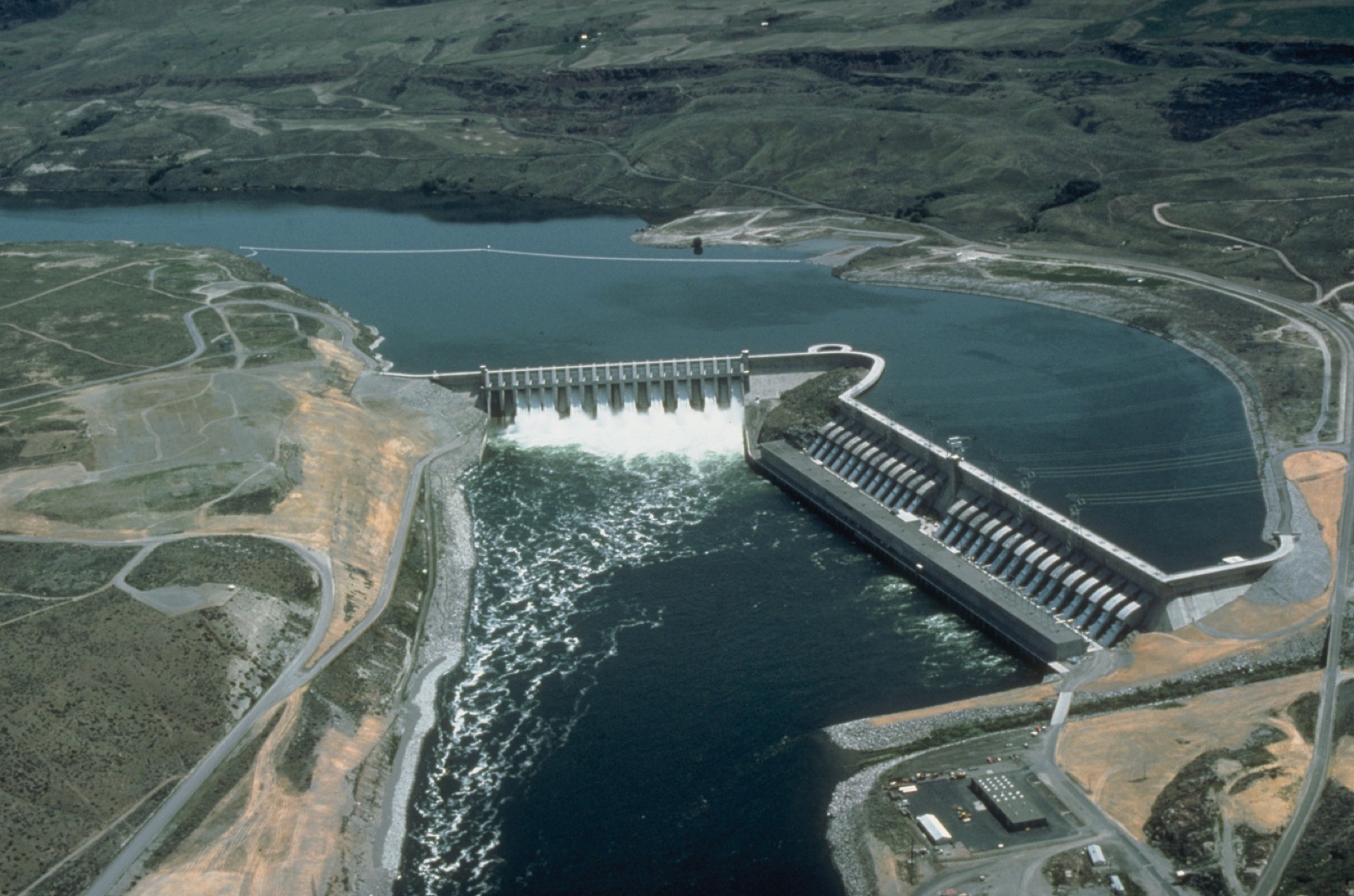
The Corps calls this the second-leading hydropower producer in the United States, a 27-unit dam at Bridgeport that backs up 51-mile Rufus Woods Lake.
Chief Joseph Dam stands on the Columbia River at river mile 545 in Bridgeport. Congress first authorized it as Foster Creek Dam in the River and Harbor Act of 1946, then renamed it Chief Joseph Dam in 1948. Construction began in 1949. Units 1–8 came online in 1955, units 9–16 in 1958, and units 17–27 in 1979.
The dam is 236 feet high and 5,962 feet long. The powerhouse is 2,039 feet long. Twenty-seven units produce 2,607 megawatts. The reservoir, Rufus Woods Lake, extends 51 miles upstream. The Corps calls the project the second-leading hydropower producer in the United States, generating about $450 million a year, with about 80 percent of the power going to the Everett area.
The sources below are the Corps Northwestern Division fact sheet.
- Geography & Geology
- History
Sources (1)
government · Tier S
U.S. Army Corps of EngineersChief Joseph Dam and Rufus Woods Lake
Last reviewed: September 20, 2026
Keep wandering
same arc
Bonneville DamThe first federal lock and dam on the Columbia and Snake spans the river between Oregon and Washington at river mile 146.1.
nearby
Chief JosephHin-mah-too-yah-lat-kekt led the Wallowa band. After the 1877 flight he was refused a return to Oregon and died on the Colville Reservation on September 21, 1904.
nearby
Grand Coulee DamA Depression-era dam turned the Columbia into irrigation, power, and a 151-mile lake.
nearby
Lake RooseveltThe reservoir behind Grand Coulee Dam is officially Franklin D. Roosevelt Lake, a long pool NPS says is the largest reservoir in the Pacific Northwest.