From Washington to you
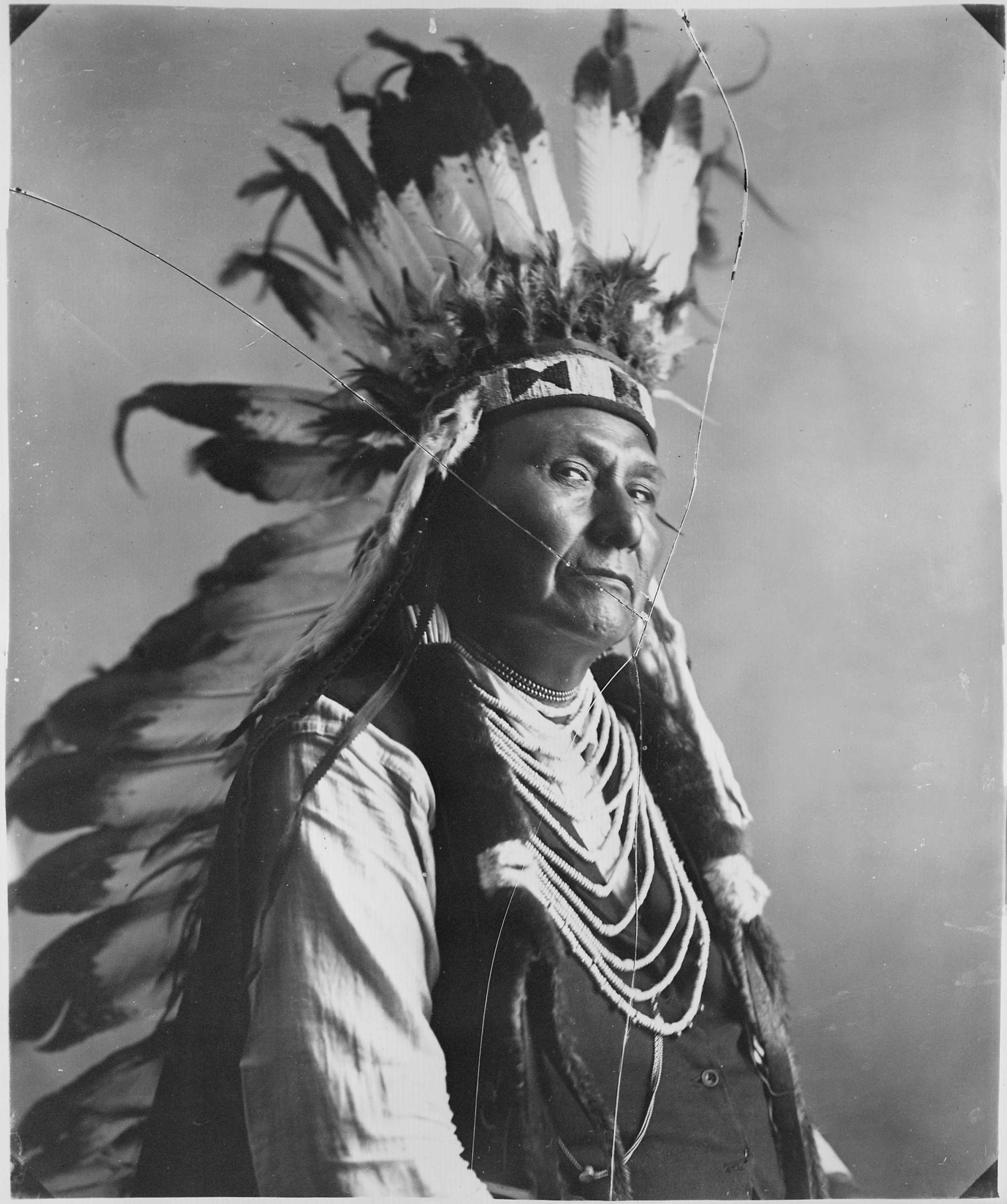
Chief Joseph
Nespelem · Okanogan County · died September 21, 1904
Hin-mah-too-yah-lat-kekt led the Wallowa band. After the 1877 flight he was refused a return to Oregon and died on the Colville Reservation on September 21, 1904.
NPS identifies Hin-mah-too-yah-lat-kekt, known as Chief Joseph (March 3, 1840–September 21, 1904), as a leader of the wal-lam-wat-kain (Wallowa) band of Nez Perce. After the United States tried to force the Nez Perce from the Wallowa Valley, he led roughly 750 Nez Perce and Palouse people toward Canada. NPS says they traveled more than 1,170 miles across present-day Oregon, Washington, Idaho, and Montana. He surrendered on October 5, 1877.
A Lake Roosevelt page says he did not sign the 1855 treaty, following his father. After surrender, survivors were sent to Oklahoma. In 1885, with help from Chief Moses, Joseph and most of his people were sent to the Colville Reservation, across from Fort Spokane. He died September 21, 1904, after repeated denials of a return to Oregon.
NPS says he is buried on the Colville Reservation near Lake Roosevelt, a unit of Nez Perce National Historical Park. The park’s Nez Perce Cemetery place page, managed by the Colville Confederated Tribes, says the cemetery is a culturally sensitive active cemetery: exact locations will not be provided, and visitation is not encouraged. This pin is the town of Nespelem, not the grave. The sources below are National Park Service pages.
- History
- Indigenous History & Place
Sources (3)
government · Tier S
National Park ServiceNez Perce Cemetery
government · Tier S
National Park ServicePeople
government · Tier S
National Park ServiceChief Joseph
Last reviewed: September 21, 2026
Keep wandering
nearby
Chief Joseph DamThe Corps calls this the second-leading hydropower producer in the United States, a 27-unit dam at Bridgeport that backs up 51-mile Rufus Woods Lake.
nearby
Fort SpokaneThe Army built a fort above the Spokane–Columbia confluence in 1880. After the garrison left, the same buildings became a boarding school and then a hospital.
same arc
Kettle Falls FisheryNPS calls the drowned falls an inland-Northwest center for more than 9,000 years. Tribes speared and netted thousands of salmon—enough, the park says, for half a year’s diet.
nearby
Lake RooseveltThe reservoir behind Grand Coulee Dam is officially Franklin D. Roosevelt Lake, a long pool NPS says is the largest reservoir in the Pacific Northwest.