From Washington to you
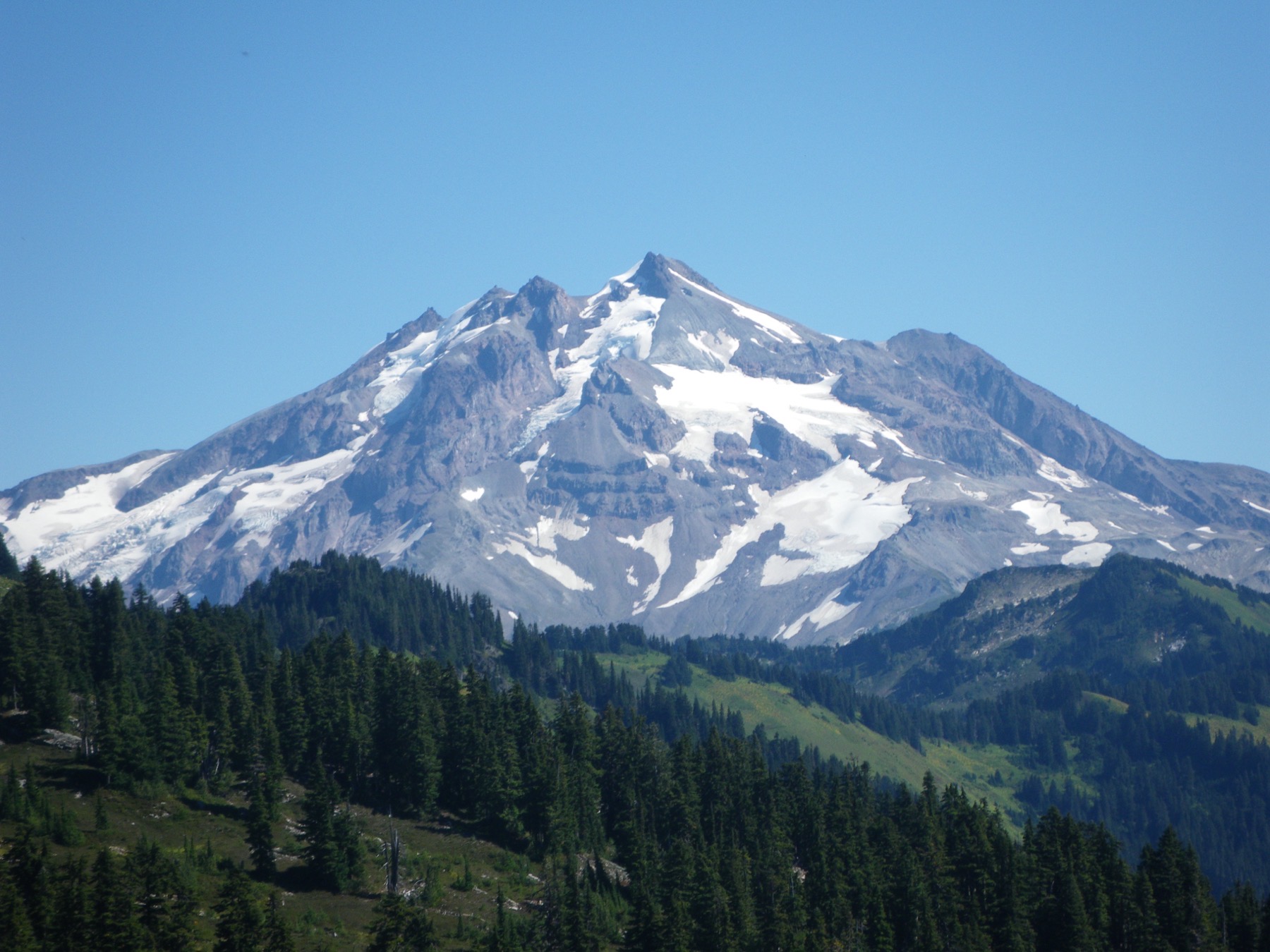
Glacier Peak
Glacier Peak · Snohomish County · last eruption about 1,100 years ago
Washington's most remote active volcano is easy to miss from the cities — and has produced some of the biggest eruptions in the Lower 48.
Glacier Peak stands in Snohomish County at 48.112° N, 121.113° W. USGS lists it at 3,213 meters, or 10,541 feet. It is a dacite stratovolcano, and more than a dozen glaciers come down its flanks. The National Volcano Early Warning System rates its threat potential as Very High.
It is the most remote of Washington's five active volcanoes. Settlers did not know it was a volcano until the 1850s, when Native Americans told naturalist George Gibbs that a smaller peak north of Mount Rainier "once smoked." Because it is not prominent from any major city, USGS says its attractions and its hazards tend to be overlooked.
Since the last ice age it has erupted in at least six separate episodes. USGS says Glacier Peak and Mount St. Helens are the only Washington volcanoes that have produced very large explosive eruptions in the past 15,000 years. The last eruption was about 1,100 years ago. The main hazard today is lahars in the White Chuck, Suiattle, Sauk, and Skagit valleys. About 13,000 years ago, lahars reached Arlington — more than 95 kilometers downstream — and left more than 2 meters of sediment. The sources below are the public USGS record of the mountain.
- Geography & Geology
- Science / Strange Washington
Sources (3)
government · Tier S
U.S. Geological SurveyLahar Hazards at Glacier Peak
government · Tier S
U.S. Geological SurveyGlacier Peak
government · Tier S
U.S. Geological SurveyHazards Summary for Glacier Peak
Last reviewed: September 20, 2026
Keep wandering
same arc
Cascadia Subduction ZoneA quiet plate boundary runs from California to British Columbia — and under Washington.
nearby
Diablo LakeThe turquoise is not dye. It is rock, ground to flour by ice and held in a reservoir.
same arc
Mount RainierThe highest Cascade peak is also the most threatening volcano in the range — not for lava, but for mud.
same arc
Mount St. HelensOn a clear May morning, the north side of the mountain gave way.