From Washington to you
Mount Adams
Mount Adams · Yakima County · last eruption 3,800 years ago
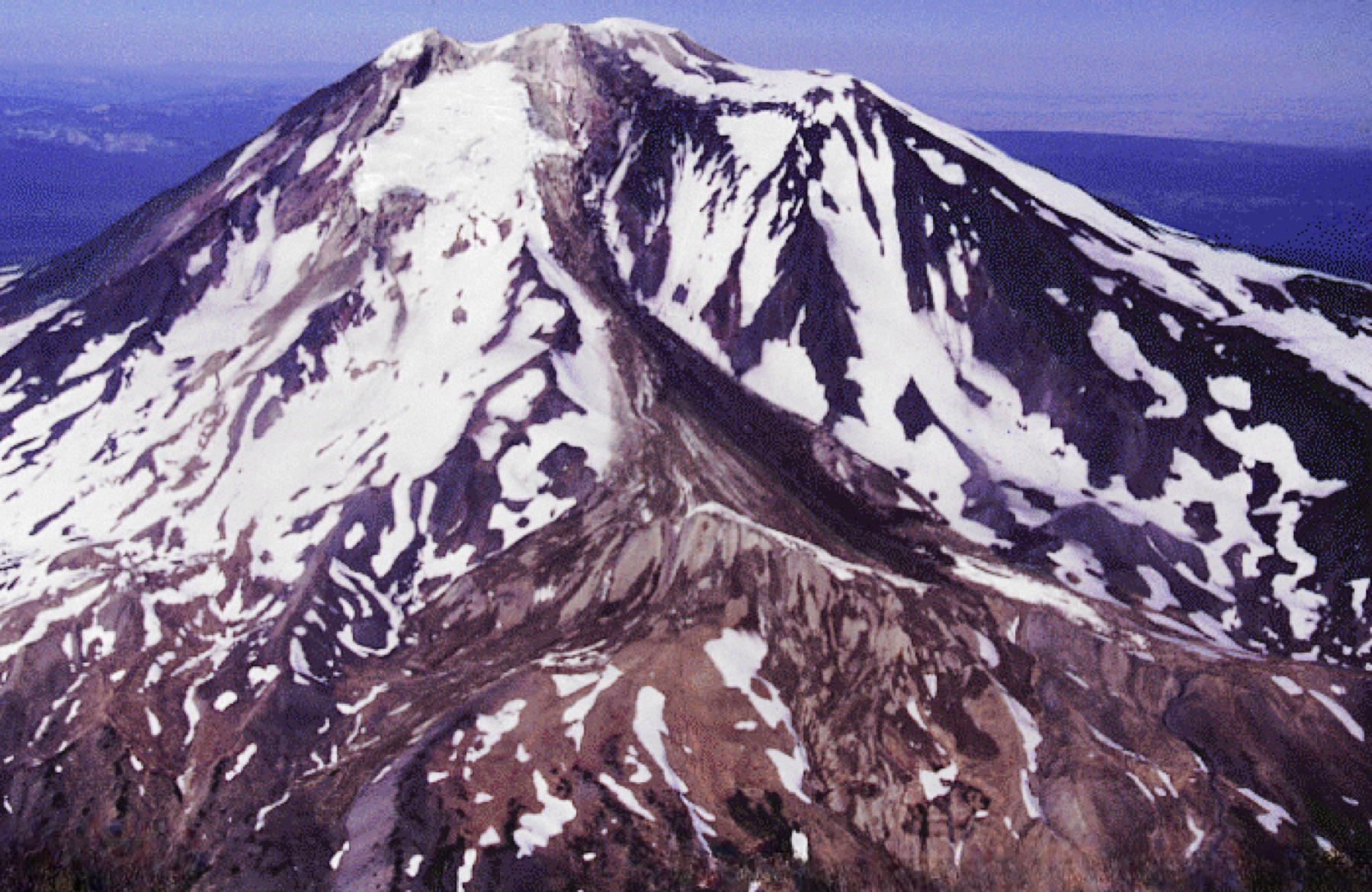
Washington's largest active volcano has produced more eruptive material in the past million years than any Cascade stratovolcano except Mount Shasta.
Mount Adams sits on the Yakama Nations Reserve and in Skamania and Yakima Counties at 46.206° N, 121.49° W. USGS lists it at 3,742 m, or 12,277 ft. It is a stratovolcano of basalt to andesite. The most recent eruption was 3,800 years ago. The National Volcano Early Warning System rates its threat potential as High.
USGS calls it the largest active volcano in Washington State and among the largest in the Cascades. It has produced a larger volume — about 300 km³ or 70 mi³ — of eruptive material during the past million years than any other Cascade stratovolcano except Mount Shasta (about 350 km³ or 85 mi³). It lies in the middle of the Mount Adams volcanic field, a 1,250 km² (about 500 mi²) area of at least 120, mostly basaltic volcanoes, active for at least the past one million years.
Mount Adams itself was active from about 520,000 to about 1,000 years ago and has erupted mostly andesite. Eruptions have occurred from ten vents since the last period of glaciation about 15,000 years ago. About 6,000 and 300 years ago, debris avalanches from the southwest face generated clay-rich lahars that swept more than 30 km² (11 mi²) south along the White Salmon River. The summit holds a large section of unstable altered rock that can spawn future debris avalanches and lahars.
- Geography & Geology
- Science / Strange Washington
Sources (1)
government · Tier S
U.S. Geological SurveyMount Adams
Last reviewed: September 20, 2026
Keep wandering
same arc
Cascadia Subduction ZoneA quiet plate boundary runs from California to British Columbia — and under Washington.
same arc
Glacier PeakWashington's most remote active volcano is easy to miss from the cities — and has produced some of the biggest eruptions in the Lower 48.
same arc
Mount RainierThe highest Cascade peak is also the most threatening volcano in the range — not for lava, but for mud.
same arc
Mount St. HelensOn a clear May morning, the north side of the mountain gave way.